


I've always wanted to learn to play songs.
For many people, learning the guitar has always been something they wanted to do.
Maybe you bought a guitar and never got beyond a few chords. Work, family and other responsibilities took priority. Now there's finally time to return to something you've wanted to do for years.
Your goal doesn't have to be performing on stage or becoming a professional musician. For many people, it's enough to play songs they enjoy, accompany themselves while singing, or pick up the guitar at the end of the day.
If this is where you'd like to begin, I'd be glad to hear from you.

I want to write my own music.
Learning songs by other artists often inspires the thought, "Could I write my own song?"
Maybe you've written a few songs but they all seem to sound alike. Or perhaps you can hear a melody in your head but aren't sure how to bring it to life on the guitar.
Writing your own music develops through listening and understanding how the different elements of music work together. As your understanding of music grows, so does your ability to express your ideas.
Over time, your ideas become easier to develop and your own musical voice begins to take shape.

I want to learn improvisation and jazz harmony
At some point, playing what is already written will not be enough. You will want to create something of your own.
Maybe you have learned a few scales but are not sure how to use them musically. Or perhaps you have memorised a handful of licks that always seem to appear in the same places. Watching more videos has not changed that.
Improvisation can lead in many directions. You may want to understand jazz improvisation, learn how to play over chord changes, explore jazz harmony, or improvise over a 12-bar blues. You may be interested in connecting scales to chords, finding melodies on the guitar, or simply becoming more comfortable creating music in the moment.
These concepts develop through listening, understanding, and applying musical ideas on the guitar. As those ideas become familiar, creating music becomes more intentional and less dependent on memorised scales and licks.
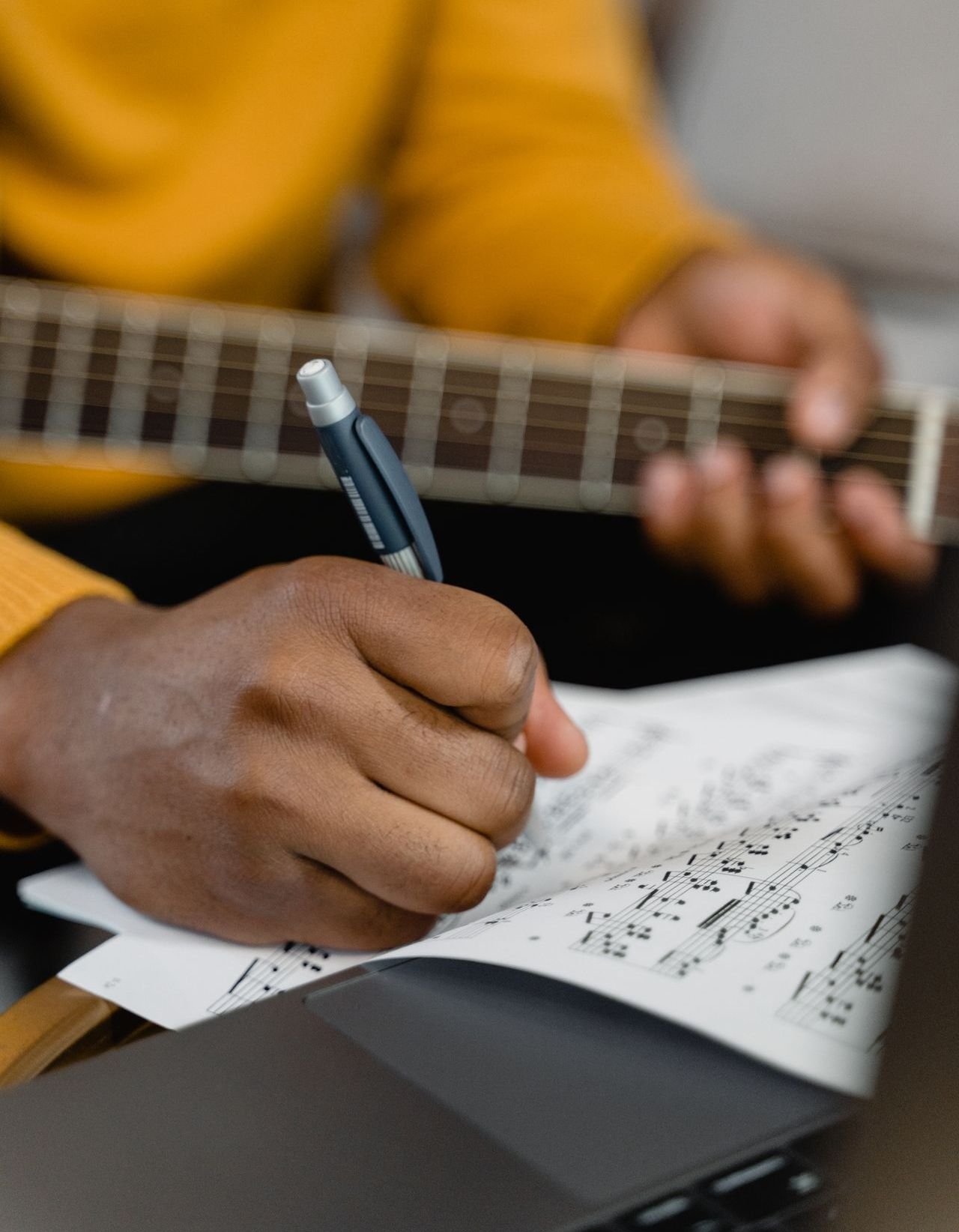
I want a deeper understanding of music.
Learning songs and techniques often leads to bigger questions. Why do certain chords work together? Why do some melodies stay with us? How do great musicians create such expressive music?
An interest in harmony or improvisation begins with the desire to understand the ideas that connect different songs and styles.
At this stage, understanding becomes more important than collecting information.
As your understanding of music grows, you begin recognizing ideas that appear across different songs and styles and listening becomes a very different experience.
Curious about the learning experience?
The Mentorship page explains how lessons are structured, how students learn and what you can expect from working together.